No products in the cart.


JEAN-JACQUES LAGRENÉE
Paris 1739-1821 Paris
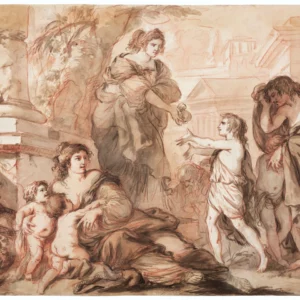
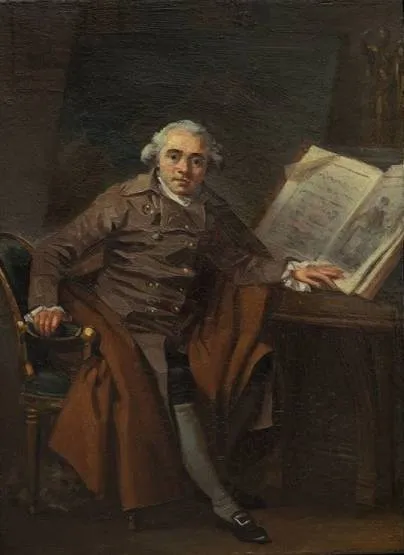
Jean-Jacques Lagrenée, known as Lagrenée le Jeune, was a painter, engraver, and prolific draughtsman active in the second half of the eighteenth century. He was the younger brother of the history painter Louis Lagrenée, Lagrenée le Vieux (1724-1805). Jean-Jacques Lagrenée trained under his elder brother and later followed him to Russia, where they stayed from 1760 to 1762. Although Jean-Jacques only obtained second place in the 1760 Prix de Rome, he was allowed to reside at the French Academy in Rome from 1763 to 1768. In Rome, he discovered classical antiquities which he drew and engraved, and which inspired him throughout his career. After returning to Paris, Jean-Jacques Lagrenée was approved by the Royal Academy in 1769 and then received in 1775. Jean-Jacques Lagrenée was first and foremost a history painter who adhered to the neoclassical aesthetic. He created numerous religious paintings, as well as important decorations such as Apollo surrounded by the muses for the ceiling of the Trianon theatre in Versailles. Lagrenée exhibited regularly at the Salon between 1771 and 1804. He was also the director of the Sèvres manufactory from 1785 to 1790, where his taste for the antique predominated, as seen in the decor of the Etruscan service made for Marie-Antoinette.