No products in the cart.


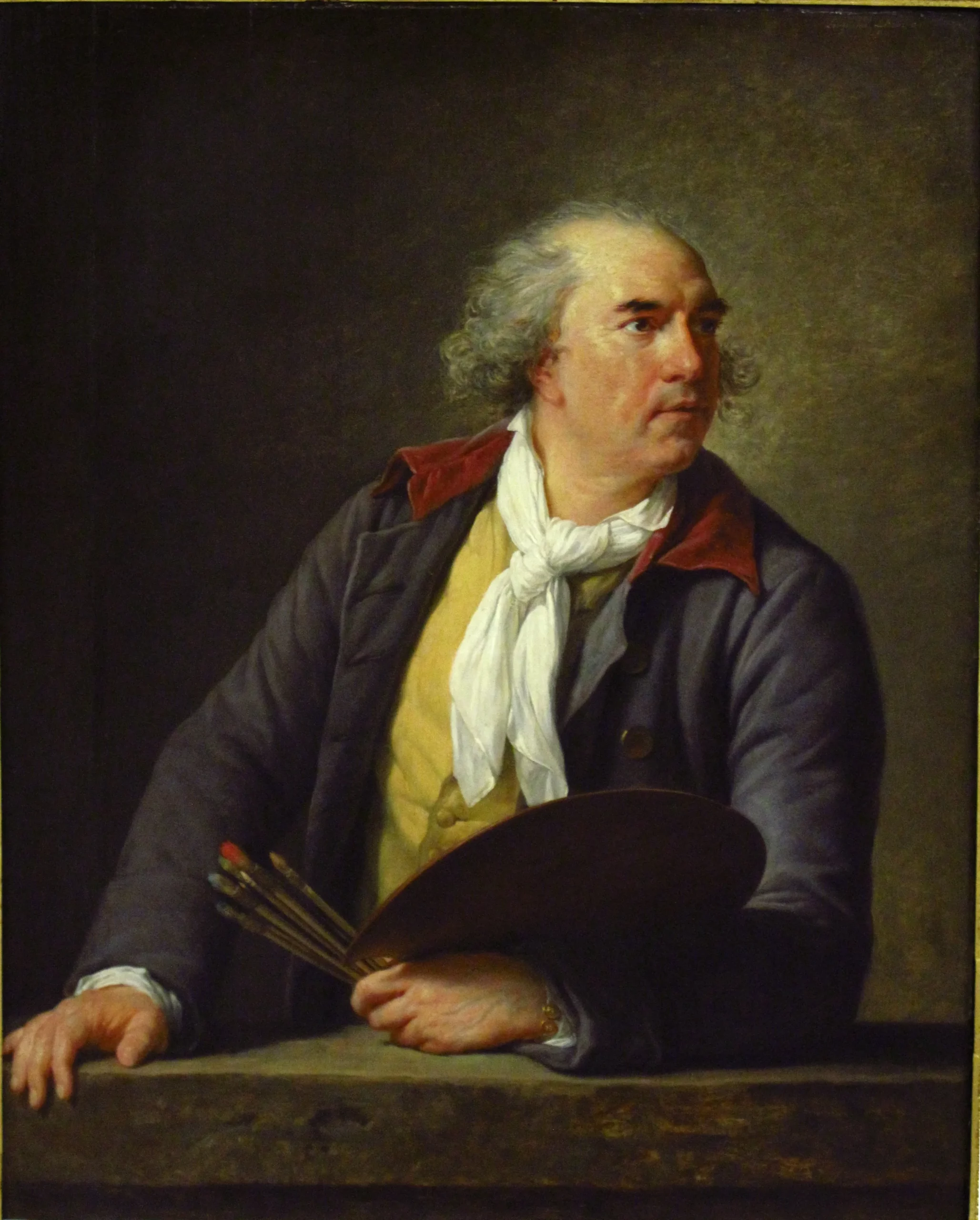
Hubert Rober
Paris 1733 – 1808 Paris
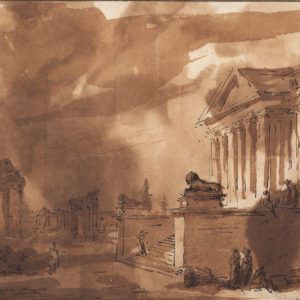
Born into a privileged family, Hubert Robert received a good education at the Collège de Navarre in Paris. Encouraged by a professor who recognized the young student’s talent, he entered the studio of the sculptor Miche-Ange Slodtz. In 1754, he went to Italy for the first time thanks to his patron, the Count of Stainville, a wealthy employee of Hubert Robert’s father and French ambassador to Rome. Having become a boarder at the Académie de France, he met Jean-Honoré Fragonard, Augustin Pajou, Charles de Wailly and frequented the Piranesi family’s engraving studio, developing a particular sensitivity for the representation of the remains of Antiquity and Roman architecture. During his stay in the Eternal City, the artist produced numerous drawn studies of clipped gardens, fragments of nature, porticoes, pedestals and statues, which he recombined into imaginative compositions. These Italian drawings would be a source of inspiration for many of his paintings in the following years.
Returning to Paris in 1766, the artist presented Le port de Ripetta à Rome (Paris, École des Beaux-Arts) at the Académie royale de peinture et de sculpture. From 1767, Hubert Robert exhibited several architectural caprices and landscapes at the Salon, which were praised by critics and earned him the nickname “Robert of the ruins”. His paintings were particularly appreciated by Denis Diderot, who devoted enthusiastic comments to the artist, published in the Correspondance littéraire in 1767, 1769 and 1771: “Oh the beautiful, the sublime ruins! […] Time stands still for the one who admires. The ideas that ruins awaken in me are great”. Now a well-established artist and sought after by collectors throughout Europe, he enjoyed great success in Russia, where he was called by Empress Catherine II. In 1778, he was appointed Keeper of the King's Pictures at the Museum. He died in Paris in 1808.