No products in the cart.


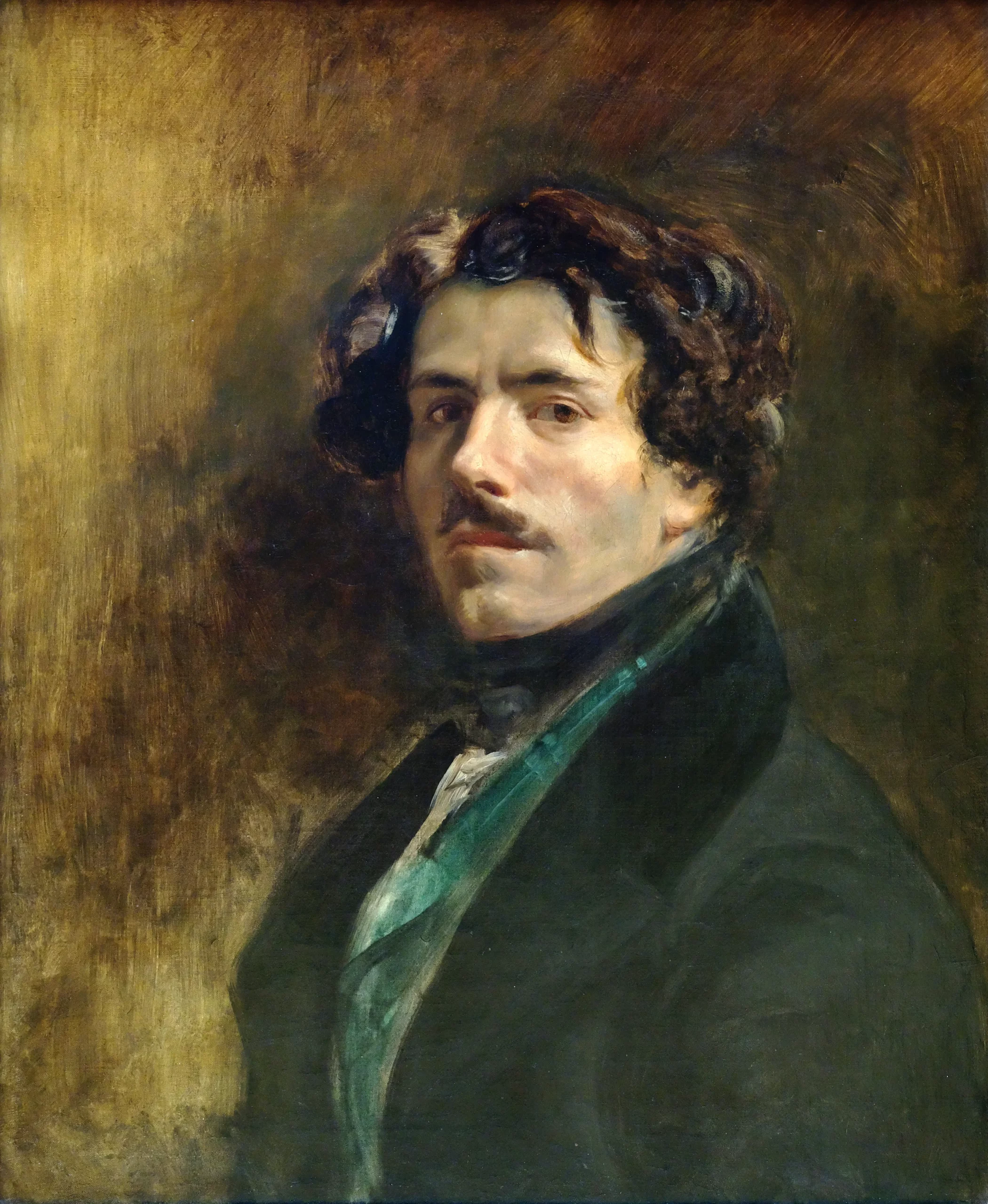
Eugène Delacroix
Charenton-Saint-Maurice 1798 – Paris 1863
Following a visit to the Louvre where he was deeply fascinated by a painting by Francisco Goya (1746-1828), the young Eugène Delacroix decided to devote himself to painting. In 1816, he joined the studio of Pierre-Narcisse Guérin (1774-1833). In 1822, he made his debut at the Salon with the famous painting of Dante and Virgil (Paris, Musée du Louvre), today considered one of the emblematic works of French Romanticism. Inspired by the compositions of Théodore Géricault (1791-1824), as well as by the great old masters such as Raphael, Michelangelo and Rubens, Delacroix achieved immediate success and became the flagship of a new generation of artists. His paintings overturned the rules of academic painting, favouring the primacy of colour, the violence of tones and dramatic compositions. In 1831, he presented his Liberty Leading the People at the Salon, inspired by the popular uprisings of July 27, 28, and 29, 1830, which became an iconic painting. In the early 1830s, Delacroix undertook a trip to Morocco and Algeria: the landscapes, colors, and costumes of the inhabitants fascinated the artist, who would produce more than sixty-two paintings related to this experience, including, among the most famous, Women of Algiers in their Apartment (Paris, Musée du Louvre). In 1855, Napoleon III paid tribute to the artist with a special exhibition, bringing together more than thirty of his works, on the occasion of the first Universal Exhibition in Paris. Eugène Delacroix died on 13 August 1863 in his apartment on rue de Furstemberg in Paris.