No products in the cart.


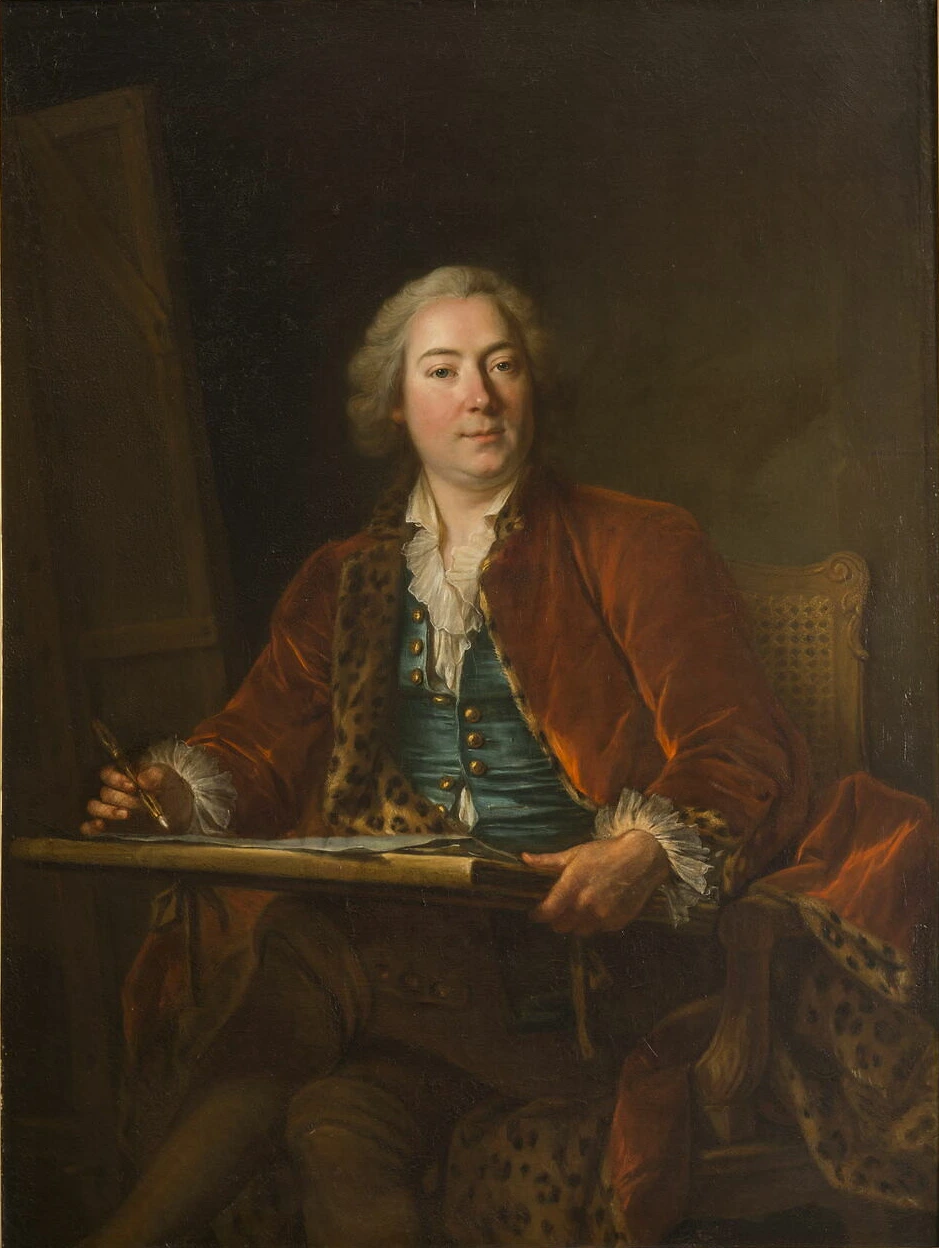
Carle André van Loo
Nice 1705 – 1765 Paris
Coming from a celebrated family of artists, Carle van Loo was one of the most important painters of eighteenth-century France. After training with his brother Jean-Baptiste van Loo in Turin and Paris, and in Rome with Benedetto Lutti and Pierre Legros, Carle van Loo returned to Paris to study at the Royal Academy, where he won the Prix de Rome in 1724. Due to a lack of money, he was not able to travel to Rome until four years later, now in the company of his friend and future rival, François Boucher. In Rome, van Loo quickly made a name for himself: he won the drawing competition of the Academy of Saint Luke the year of his arrival, became a protégé of the Cardinal de Polignac, and obtained prestigious commissions like the decorations of the vault of the Church of Saint Isidore. Upon his return to Paris in 1734, he embarked upon a brilliant professional career: he was received by the Royal Academy in 1735, named professor there in 1737, became first painter to the King in 1762, and Director of the Academy Royal in 1763. He received royal commissions for hunting scenes for the Petits Appartements of Louis XV at Versailles, important religious commissions like the six scenes of the life of Saint Augustin for Notre Dame-des-Victoires in Paris, and many demands for decorations from high class Parisian society, such as the salon of the Hotel de Soubise. Van Loo’s contemporaries, such as Voltaire, Fragonard, Doyen, and Lepicie, admired the artist for his eclectic style. Van Loo was able, in effect, to adapt his style to the function of the commission, painting more classical, softer images for private interiors, and more baroque, flamboyant images for large decorations and churches.
LES ŒUVRES
Aucune œuvre trouvée pour cet artiste.


